Artificial Intelligence is experiencing a profound shift. We are now surpassing traditional AI agents that merely automate routine tasks, such as managing chatbots, providing basic virtual assistance, or handling simple workflows. The next generation is here: agentic AI frameworks. These advanced systems blend advanced reasoning, planning, collaboration, and autonomy — turning traditional agents into truly dynamic and intelligent forces. This evolution marks a major step toward highly independent and capable AI.
Defining AI Agents
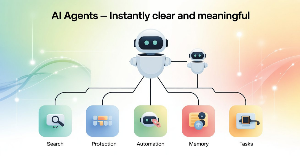
Fundamentally, an AI agent is a specialized, intelligent system designed with the singular goal of executing a particular function. Think of it as a specialized tool for a narrow job, such as responding to customer questions (like basic chatbots), extracting key information from documents, or directing support requests to the right team.
Upon receiving an input or trigger, the agent immediately follows a clear, predefined path (workflow) or applies a designated model to complete the job.
Reactive Nature: They only respond when triggered by a user command or system event.
Focused Functionality: Built for a single, well-defined task — they perform one job extremely well but lack versatility.
Static Learning: Improvements require manual retraining with new data; they can’t learn, plan, or evolve on their own in real time.
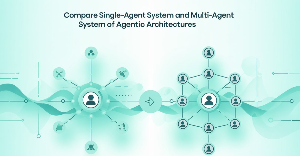
Agentic AI defines the evolution to the next-generation architecture of intelligence.. It is a fundamental shift from single, reactive agents to orchestrated systems where multiple agents work together.
Instead of just executing predefined tasks, Agentic AI systems are designed to:
Reason through highly complex problems.
Maintain persistent memory and context.
Adapt to new or changing conditions.
Self-direct pursuit of high-level goals.
These advanced systems are defined by three key capabilities:
Goal-Driven Behavior: The system can decompose complex, high-level objectives into smaller, actionable tasks—dynamically planning and adapting its approach as conditions evolve.
Persistent Memory and Reasoning: Unlike traditional AI, Agentic AI preserves context over time, actively learns from past interactions, and uses that knowledge to refine its future behavior.
Multi-Agent Collaboration: Multiple agents can collaborate seamlessly — exchanging information, coordinating decisions, and working together to accomplish complex, shared objectives.
While "AI Agent" is sometimes used broadly, here is the clear distinction between a single, function-specific AI Agent and a modern Agentic AI System:
Feature:
Single AI Agent (Function-Specific)
Agentic AI System (Orchestrated)
Autonomy:
Operates when triggered; action is limited to a single task scope.
Initiates actions; Acts proactively, adapts goals, and plans for the long term.
Intelligence Architecture:
Single entity with limited, short-term memory.
Orchestrator managing multiple specialized agents with shared, persistent memory.
Collaboration:
None; works in isolation on its specific function.
High-level agents coordinate, share knowledge, and work collectively to achieve a goal.
Goal Orientation:
Task-Specific (focuses on completing one step).
Objective-Driven and Long-Horizon (focuses on achieving a complex outcome).
Adaptation:
Mostly static; improves via retraining on new data.
Self-Evolving: learns continuously, improves strategy, and reasons during execution.
This evolution to Agentic AI frameworks is critical for several reasons:
Intelligence Scales: These systems handle complex, interconnected tasks that isolated agents, moving AI beyond simple routines.
Better Decisions: With integrated reasoning and persistent memory, these systems handle uncertainty effectively and adjust to changing objectives, delivering more consistent and reliable results.
Enterprise Necessity: Industries such as healthcare and finance require complex orchestration, making Agentic AI crucial for large-scale, deep integration.
New Opportunity: Developers can create and monetize next-generation solutions, positioning themselves in the rapidly growing agentic AI framework market.
Implications for Developers & Businesses
The architectural choice between a single AI Agent and an Agentic AI Framework is crucial:
When to Use Which:
For simple, focused tools (like a basic chatbot), a classic AI agent is ideal.
For complex, multi-step workflows requiring service coordination and adaptation, choose agentic AI frameworks (chains, memory, orchestration).
Value and Monetization:
Simple Agents are licensed as basic tools.
Agentic Systems form core infrastructure and complex service offerings, yielding higher value.
Architectural Complexity:
Agentic AI requires a more complex stack: plan early for orchestrators, persistent memory systems, and multi-agent communication to manage shared data.
The transition from simple AI agents to Agentic AI marks a true paradigm shift— from static, single-purpose tools to autonomous systems that can reason, plan dynamically, adapt to change, and collaborate intelligently. For businesses and developers, embracing this next step is crucial, as it provides the blueprint for building smarter, more impactful, and truly future-proof solutions that leverage the full potential of these intelligent frameworks.
Join AIAgentFabric.com today to discover, register, and market your AIAgents.