Autonomous AI is redefining productivity, and the Model Context Protocol (MCP) is the framework making true digital workers possible. MCP AI Agents are highly sophisticated systems that utilize this protocol to reason logically, decide on actions, and reliably interact with software tools with unprecedented precision. For developers, mastering the construction of these agents from scratch means acquiring the power to deploy customized, complex, and fully autonomous systems across any enterprise workflow.
Explore a comprehensive breakdown of MCP agent functionality, the critical technical components, and a full guide to developing your first autonomous system, from initial concept through final deployment.
MCP AI Agents (Model Context Protocol Agents) are sophisticated, autonomous AI systems designed to operate as self-governing digital workers. They are built upon the Model Context Protocol (MCP), a standardized framework that dictates how agents manage and access essential external resources—specifically, tools, data, memory, and external systems.
Unlike simple automated scripts or traditional assistants, MCP agents possess advanced functional characteristics that enable true autonomy:
Tool-Backed Reasoning: They utilize tools (e.g., code execution, APIs) to guide their decision-making and execution.
System Interfacing: They can directly access and integrate with databases, APIs, and third-party services as part of their workflow.
Contextual Awareness: They maintain a consistent understanding of the ongoing task, history, and environment.
Workflow Execution: They are capable of executing complex, multi-step workflows from initiation to completion.
Autonomy: They function reliably with minimal human intervention.
The Model Context Protocol (MCP) is essential because it fundamentally solves major architectural challenges in building autonomous AI, offering several critical benefits:
MCP defines a consistent, universal framework that enables agents to access and utilize external resources. This means agents can connect to virtually any API, database, or local/cloud tool using a single, uniform method, eliminating the need for time-consuming and fragile custom integrations for every new tool.
The protocol facilitates the use of structured context windows, which are vital for sophisticated operations. This capability enables agents with stronger reasoning, accurate memory simulation, and the ability to maintain stable, long-running workflows without losing context or focus.
For production and enterprise environments, MCP enforces strict security measures. It mandates sandboxing, rigorous permission controls, and safe runtime execution. This architecture is designed specifically to ensure trustworthy and secure operations when agents interact with sensitive corporate systems.
MCP is the engine that drives true autonomy. It enables agents to execute sophisticated autonomous action loops—allowing the agent to observe its environment, plan its steps, decide on the best action, and then act. The agent’s structured execution cycle is designed to resemble the efficiency of human workflows.
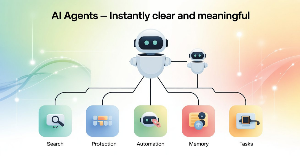
When constructing a fully functional MCP AI Agent from the ground up, the architecture relies on five interconnected, essential components:
These are the external functions or APIs the agent can invoke to interact with the world. Tools define the action space of the agent, allowing it to perform concrete operations.
These systems power the logic behind MCP tools and make them available through endpoints. The server serves as the connector between an agent’s decision to invoke a tool and the tool’s execution.
Resources encompass all the data streams, structured document stores, knowledge graphs, or real-time feeds that provide the agent with necessary information. These are the agent's knowledge sources for grounding its reasoning.
This critical component provides the initial instructions, constraints, and operational guidelines that govern the agent's reasoning and behavior. This involves the system prompt that guides the agent’s behavior and the dynamic context window that preserves interaction history and in-progress data.
The runtime functions as the central engine responsible for the agent’s execution. It is the component that handles the core reasoning, planning, and decision-making loop—receiving observations, selecting tools, and generating the final output or next step.
Constructing a high-performance MCP agent requires a systematic approach, moving from conceptual design to functional deployment.
Prior to any coding, the foundational stage is conceptual design, where the agent’s scope and purpose must be precisely outlined.
Problem Specification: Clearly articulate the specific real-world problems the agent is intended to solve (e.g., automate quarterly financial reporting).
Resource Inventory: Determine the necessary tools and data the agent will require to fulfill its mission.
Operational Mode: Decide whether the agent should operate continuously (monitoring) or only when triggered (on-demand).
The tools define the agent's physical capabilities. These must be created or configured to adhere strictly to the MCP standard format to ensure compatibility with the agent runtime.
Tool Creation: Develop specific tool handlers for essential operations: data retrieval (e.g., database queries), file management, web operations (e.g., scraping), and complex task automation.
Tool Schema: Ensure each tool has a clear schema (input/output) for the agent to use in its reasoning.
The server acts as the central host and router for your tools and resources. It exposes these functionalities to the agent runtime via defined endpoints.
Framework Selection: Initialize a suitable backend server using frameworks like Node.js, Python-based backends, or high-performance options like Rust or Go.
Registration: Implement tool registration on the server, ensuring all tools are accessible and properly routed.
The runtime is the cognitive core where all reasoning takes place. You must design robust logic for the autonomous operational cycle.
Decision Systems: Design the agent’s internal structure, often using chain-of-thought architectures or step-based reasoning.
Autonomous Loops: Implement the decision-making loops, planning routines (sequencing tasks), context refresh cycles, and detailed error recovery strategies.
This critical integration step ties all components together, moving from isolated parts to a functional autonomous system.
Symbiosis: Ensure seamless integration between the Tools, Resources, Runtime, and Initial Prompts.
Contextual Integration: Configure the agent to properly access and utilize structured context windows and memory provided by the MCP framework.
Continuous evaluation is necessary to ensure the agent is reliable, accurate, and cost-efficient in a production environment.
Debugging: Use detailed log tracing and tool call monitoring to debug complex workflows.
Validation: Perform context validation to ensure the agent maintains accurate state information.
Optimization: Iteratively optimize the agent for accuracy, speed, and cost efficiency (e.g., reducing unnecessary model calls).
MCP Agents are uniquely suited to manage complex, end-to-end tasks across various operational domains:
MCP agents can operate autonomously to scrape vast amounts of data, perform sophisticated analysis, and generate concise, actionable summaries from large datasets. They effectively eliminate the need for hours of manual data collection and analysis.
These agents are highly effective at managing workflows that flow across multiple, disconnected business systems.. They seamlessly coordinate tasks across platforms like CRM, ERP, and various cloud services to ensure automated, end-to-end process completion.
In software development, MCP agents function as fully integrated digital co-pilots. They can autonomously generate new code segments, debug complex errors, and modify existing code by utilizing their integrated development tools and resources.
MCP agents are ideal for managing large volumes of raw information. They can autonomously clean, transform, validate, and store large datasets with high reliability, ensuring data quality and readiness for downstream analysis.
Deployed as true digital workers, these agents handle routine operational tasks. They can autonomously send personalized emails, create and update documents, manage dynamic calendars, and handle complex operational logistics without requiring human intervention.
As the Model Context Protocol (MCP) framework continues to mature, the sophistication of autonomous agents will accelerate, paving the way for several transformative advancements.
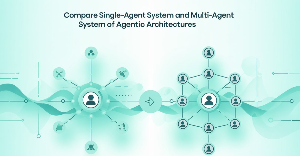
Multi-Agent Collaboration Ecosystems: We will see the emergence of networks where specialized MCP agents collaborate autonomously, sharing information and delegating tasks to solve problems too complex for any single agent.
Persistent Memory Frameworks: Agents will be equipped with robust, stable memory systems that maintain long-term knowledge and contextual history, making interactions more dependable and tailored to individual users.
Self-Improving Agents: Future agents will incorporate meta-learning capabilities, allowing them to observe and analyze their own performance, identify inefficiencies, and autonomously refine their own planning and reasoning logic to enhance execution.
Agent-Based Digital Economies: MCP agents will increasingly participate in economic activities, autonomously transacting, negotiating, and managing resources within digital marketplaces.
Mastering the next era of artificial intelligence fundamentally relies on the ability to build MCP AI Agents from scratch. Leveraging the protocol's standardized tooling, robust security, and advanced context management, developers are empowered to reliably build intelligent agents that solve the most complex problems with unprecedented autonomy. Mastering the Model Context Protocol empowers everyone—from developers and entrepreneurs to enterprise leaders—to directly create the cutting-edge autonomous systems that will shape the next era of work and innovation.
Join AIAgentFabric today to discover, register, and market your AIAgent