

An Overview
This week made one thing very clear: the AI agent industry is moving beyond isolated copilots and into fully orchestrated execution systems.
The biggest announcements weren’t just about smarter models; they were about governance, orchestration, infrastructure, and enterprise-scale deployment. Companies are now designing AI agents to operate across entire organizations, coordinate with other agents, and execute workflows with minimal human involvement.
Here are 10 major developments from this week that are shaping the next phase of the agentic AI ecosystem.
1. SAP unveils the “autonomous enterprise”
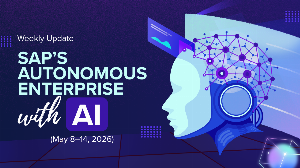
SAP introduced one of the biggest enterprise AI announcements of the week with its vision for the “Autonomous Enterprise.” The company launched a unified AI platform designed to help organizations build, orchestrate, govern, and deploy AI agents across finance, HR, procurement, and customer operations.
What makes this important is SAP’s shift from fragmented copilots to systems that can autonomously execute end-to-end business workflows. The company is positioning AI agents not as assistants, but as operational systems embedded deeply into enterprise infrastructure.
2. SAP pushes ai agents beyond assistance into execution
Alongside its broader announcement, SAP emphasized a major strategic shift: moving from “AI assistance” to AI execution. Instead of role-specific copilots, SAP wants orchestrated AI systems that can manage complete customer and enterprise journeys autonomously.
This reflects a broader trend happening across the industry companies are no longer asking whether AI can generate content. They’re asking whether AI agents can actually operate workflows reliably and securely.
Read More
3. ibm introduces a blueprint for the ai operating model
At Think 2026, IBM introduced what it calls a “Blueprint for the AI Operating Model,” focused heavily on agent orchestration, governance, and enterprise deployment.
IBM’s approach centers around helping organizations plan, build, deploy, and monitor AI agents from a unified system. The announcement highlights how governance and observability are quickly becoming as important as the models themselves.
Read More
4. Boomi expands governance for enterprise ai agents
Boomi launched new governance and orchestration capabilities aimed specifically at enterprises deploying multiple AI agents. The platform adds policy enforcement, monitoring, and workflow management tools to help organizations maintain control as agent ecosystems grow.
This matters because “agent sprawl” is becoming a real issue. As companies deploy more AI systems, orchestration and governance layers are becoming essential infrastructure.
Read More
5. Service Now wants ai agents in every department
ServiceNow announced a major expansion of its Autonomous Workforce initiative, introducing AI specialists for IT, HR, legal, CRM, and finance. The company reported dramatic efficiency gains, including some support cases being resolved nearly instantly compared to human workflows.
The key takeaway is that AI agents are no longer isolated productivity tools—they’re becoming integrated operational workers inside enterprise systems.
Read More
6. UI path integrates coding agents into enterprise automation
UiPath became one of the first major orchestration platforms to support native integration for coding agents like Claude Code and OpenAI Codex.
This is significant because coding agents are quickly evolving into autonomous development systems capable of writing, debugging, testing, and deploying software with minimal supervision.
Read More
7. Atlassian expands MCP-based ai orchestration
Atlassian introduced updates focused on cross-domain orchestration using MCP (Model Context Protocol), while also addressing concerns around token usage and orchestration efficiency.
MCP is increasingly emerging as a foundational layer for enterprise AI agents, helping systems securely manage permissions, tool usage, and execution across environments.
Read More
8. NVIDIA continues building open agent infrastructure
NVIDIA continues to expand its open AI agent ecosystem with new tooling focused on orchestration and deployment. Its latest updates position NVIDIA not just as a hardware provider, but as a foundational infrastructure company for agentic AI systems.
The company’s focus on open frameworks and orchestration tools reflects growing demand for scalable agent infrastructure.
Read More
9. Multi-agent orchestration is becoming the new software architecture
A growing number of enterprise leaders now believe the future of software development will revolve around multi-agent orchestration rather than standalone models.
Instead of a single AI system handling everything, organizations are increasingly building ecosystems where specialized agents collaborate, handling planning, execution, validation, and monitoring independently.
Read More
10. Goverance and security become central to agentic ai
This week also highlighted a growing industry focus on governance, auditability, and safety as AI agents become more autonomous. Experts are increasingly calling for stronger oversight systems, human override mechanisms, and policy-based orchestration frameworks.
As AI agents begin operating inside mission-critical systems, governance is no longer optional it’s becoming foundational.
Read More
Final takeaway
This week’s announcements reveal a major shift happening across the AI industry:
1.AI agents are moving from copilots to operational systems
2. Multi-agent orchestration is becoming core infrastructure
3. Governance, security, and observability are now critical priorities
4. Enterprises are deploying AI agents at scale not just testing them
The conversation is no longer:
“Can AI assist humans?”
It’s becoming:
“Can AI systems safely coordinate, execute, and govern workflows autonomously?”


